


Willkommen bei Klein Marken-Dämmstoffe
Vermiculite und Perlite für Dämmung, Brandschutz und viele andere Einsatzgebiete
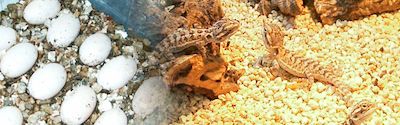
Seit mehr als fünf Jahrzehnten ist die Dämmstoff-Fabrik Klein Ihr Spezialist in der Fertigung von innovativen, bedarfsspezifischen Lösungen für die Industrie, den Brandschutz, den Gartenbau sowie den Tierbedarf. Ein Fokus liegt dabei unter anderem auf den natürlichen Rohstoffen Vermiculite (dt. Vermiculit) und Perlite (dt. Perlit), die zur Dämmung auf hohem Niveau, als Basis für Schüttungen und Zuschlagstoffe im Bau und vieles mehr verwendet werden.
Vermiculitplatten eignen sich beispielsweise ideal als Wärme- oder Schalldämmung und Vermiculit-Formteile für spezielle Anwendungsbereiche, unter anderem als Trennringe, Gehäuse, Schutzkappen und vieles mehr. Unser Sortiment wird durch Brandschutzbandagen bzw. Brandschutzgewebe, Einstreumittel etc. optimal abgerundet.
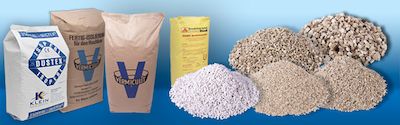
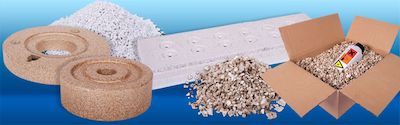

Vermiculite und Perlite: Naturmaterialien als Basis für Dämmstoffe, Ausgleichsschüttungen und andere Bereiche
Vermiculite und Perlite sind hitzebeständig, wärmeisolierend und schalldämmend, wodurch sie eine optimale Basis für die unterschiedlichsten Anwendungsgebiete bilden. Bei Vermiculite und Perlite handelt es sich um ökologisch unbedenkliche Naturprodukte. Einsetzbar sind Vermiculite und Perlite als Dämmung, für Ausgleichsschüttungen unter Estrich oder Trockenschüttungen in den Bereichen Boden und Decken. Zudem eignen sich Vermiculite und Perlite als Leichtzuschlagstoffe für mineralische Putze oder die Verarbeitung in diversen Mörteln. Nutzen Sie Vermiculitplatten zur Auskleidung von Feuerräumen Ihres Kaminofens, Schall- oder Wärmeschutz.
Vom Brandschutzgewebe bzw. der Brandschutzbandage bis hin zum Brandschutzsystem
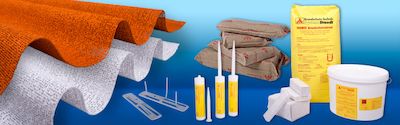
Neben Produkten für das Baugewerbe und die Industrie, liegt unser Fokus auf dem Brandschutz, denn nur innovativer Brandschutz mit System ist Ihr Schutz! Zum Sortiment gehört das reißfeste, flexibel anbringbare Hapuflam® Brandschutzgewebe für elektrische Kabel und Kabelanlagen; auch für die Kabelabschottung in Massivwänden geeignet. Die Brandschutzbandage verfügt über ein CE-Zeichen und die ETA-Zulassung. Zudem bieten wir Ihnen das Staudt Brandschutzsystem inklusive Kabelschott, Tromex Brandschutzmörtel und Brandschutzkitt und weiteres mehr.
Rohstoffe
Perlit - ist ein Silikatgestein vulkanischen Ursprungs, weshalb es auch oft als Vulkangestein oder Obsidian bezeichnet wird.
Vermiculit - ist ein Aluminium-Eisen-Magnesium-Silikat, das zur Gruppe der Glimmerminerale gehört.
Kontakt
Telefon: +49 (6355) 497
Telefax: +49 (6355) 457
E-Mail: info@klein-daemmstoffe.de
Internet: www.klein-daemmstoffe.de